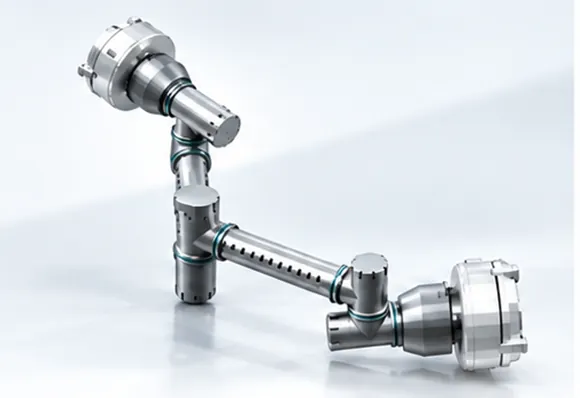
 Concept render
S7 mobile manipulator
Dual-ended, alternating attachment to move across a facility surface; for inspection, interface work and module replacement.
Read moreDifferent tasks need different robot configurations, yet all of them connect to the object being handled, mounting and support, tool interfaces, sensing and control, and mission verification. We organise development around these elements and agree integration conditions with hosts and mission owners.
Selecting single-arm, in-bay or multi-arm configurations based on the task, reusing suitable joint and control modules.
Tools and interfaces defined around mounting, anchoring, grasping and the handled object, without assuming every host is the same.
Turning task requirements into position, contact and state feedback; supervised execution and anomaly handling.
Keeping requirements, configuration, task steps and evidence in step, to support trade studies, engineering reviews and later verification.
Concept renderDual-ended, alternating attachment to move across a facility surface; for inspection, interface work and module replacement.
Read more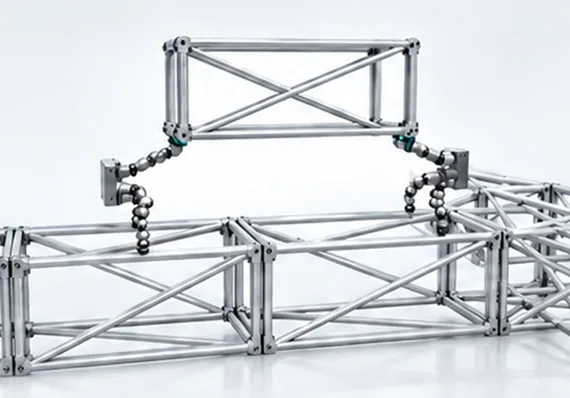 Concept render
Coordinated handling, alignment and joining for in-orbit structures.
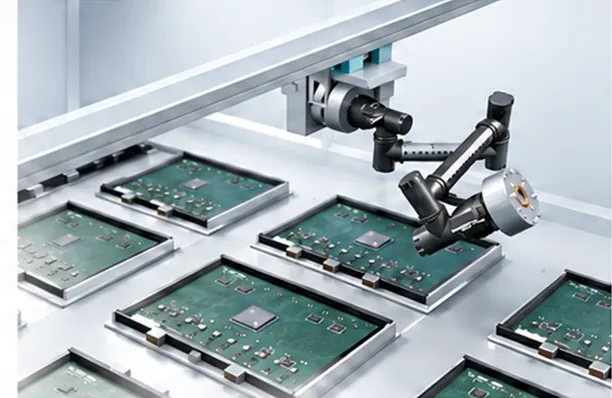 Concept render
Compact body and configuration for close-range inspection and fine manipulation.
Configuration renders; dimensions and parameters follow the configuration version agreed in mission review.
Single-arm, in-bay and multi-arm configurations sharing joints and control modules
Anchor, tool and object interfaces defined separately
Relative sensing, layered skills, joint-level active compliance
Requirements, configuration, steps and evidence kept in step
Responsibilities are agreed item by item in mission review; we do not assume every host offers the same conditions.
Joints, control and manipulation capability carry across configurations; end effectors, tools and interfaces are configured for each host and task object. Each new host or environment gets its own adaptation and verification.
System configuration, parameters and applicable environments are set in mission review. Verification scope in product and engineering material applies to the stated version and conditions.
Tell us the object, the platform and where your project stands. Together we turn it into a task description, an interface list and a verification scope both sides agree on.